


COLUMBIA ROAD HACKNEY CITY FARM BROADWAY MARKET LONDON FIELDS HACKNEY CENTRAL
After COLUMBIA ROAD and HACKNEY ROAD. HAGGERSTON HACKNEY CITY FARM Following the BLACK PATHThe REGENTS CANAL BROADWAY MARKET. Eateries and shops LONDON FIELDS. Martello towers?
East London food markets

If today is Saturday, BROADWAY MARKET will be at full wing but the FLOWERS and PLANTS street market in COLUMBIA ROAD will take place tomorrow,
Nearby BRICK LANE is becoming more busy Saturdays, but the big day is tomorrow…
But, on Saturday RIDLEY ROAD MARKET is great!
On SAT. & SUN. small market at BONNER GATE, VICTORIA PARK
HAGGERSTON (or HACKERSTON?).


You are in HAGGERSTON, historically part of SHOREDITCH, now integrated in the LONDON BOROUGH OF HACKNEY. London’s EAST AND.
A VIKING name, appears as HERGOTESTANE, in the DB of 1086. An outlying hamlet for centuries… In 1745, known as ANGOSTONE, according to ROCQUE’s map. In the 19th c. the form HAGGERSTONE was adopted. Precisely when the district was formed by factories and workers cottages. The REGENTS CANAL was part of the landscape.
Many terraced houses and factories were destroyed during WW2, and they gave way to large COUNCIL ESTATES, like the HAGGERSTON or the KINGSLAND (demolished in 2013).
Now, professionals in creative industries and students live in the area. Art galleries are a common sight. And many technological startups are based here (“HACKERSTON”!). Property prices are escalating.
Hackney Road
K2 phone booth
Former QUEEN ELIZABETH HOSPITAL for CHILDREN
The Dispensary for Women and Children in Virginia Road, Bethnal Green, was founded in 1867 by two Quaker sisters, Ellen and Mary Philips, in the wake of a cholera epidemic. They soon decided that only children should be treated; the work was transferred shortly after to 125 Hackney Road, as the North Eastern Hospital for Children. The Hospital had 12 cots.
In 1870 the freehold of a building on the corner of Hackney Road and Goldsmiths Row was acquired and the Hospital moved there. During the late 19th century new ward buildings were added and the Hospital was greatly expanded.
In 1907 it was renamed the Queen's Hospital for Children.
A beautiful building reconverted into luxury flats.
MICHAEL JACKSON landed in the park, in a helicopter, in company of MICKY and MINNIE MOUSE, in order to visit the kids recovering here…
Nos. 253-261 Georgian houses
HACKNEY CITY FARM

Enthusiasts of nature, inspired by the one in KENTISH TOWN, intended to offer some experience in farming to the local youth. Farming and market gardening took place, indeed, in the area. Here, from 1880 until the 1930s, brewing took over, thanks to the an availability of the ideal water (the well, although capped, is still here for you to see). Furniture and button makers were other activities that took place here. The JENKINS road haulage company, a family affair, was based here, as well).
When the CITY FARM was first formed, in 1982, animals were kept in ST.SAVIOUR’s garden, until the derelict lorry park was purchased.
FRIZZANTE Restaurant
HAGGERSTON PARK
HAGGERSTON PARK was formed in the 1950 where gas works (the thick boundary brick wall past bordering Haggerston Park is preserved in Whiston Road) that were once part of the Shoreditch Gas Works, which formerly occupied this site. They were built by the Imperial Gas Light & Coke Company in 1823. The Bethnal Green gasometers (to the NE) were constructed to contain the gas that was produced here, fired by coal delivered by canal. The gas works closed in 1945)).
Tile factories (TUILERIE ST.) and derelict housing were demolished. The site was hit by a V2 in 1945.
A 6 hec. of nature and football pitches, and a long pergola walk.
In the 1980s it was extended to include the HACKNEY CITY FARM, and playing fields. A new academy was built
AUDREY ST. The former DEPOT is listed a Sp Int Nat Con

Nearby
HAGGERSTON SCHOOL
Arch.ËRNO GOLDFINGER (1964/5]
ST.SAVIOUR’s PRIORY
Aut religious house, belonging to the SOCIETY OF ST.MARGARET. It was f., within the ANGLO-CATHOLIC movement, by Rvd. Dr.JOHN MASON NEALE, in 1855. It is an order of women nursing those living in and isolation
ST.MARY’s SECRET GARDEN
Laburnum St.
BRIDGE ACADEMY
On the site of LABURNUM SCHOOL: https://www.londonremembers.com/subjects/laburnum-street-school?memorial_id=10456
Whiston Road
HAGGERSTON PUBLIC BATHS

Arch. CROSS / SPALDING, 1904. Edwardian
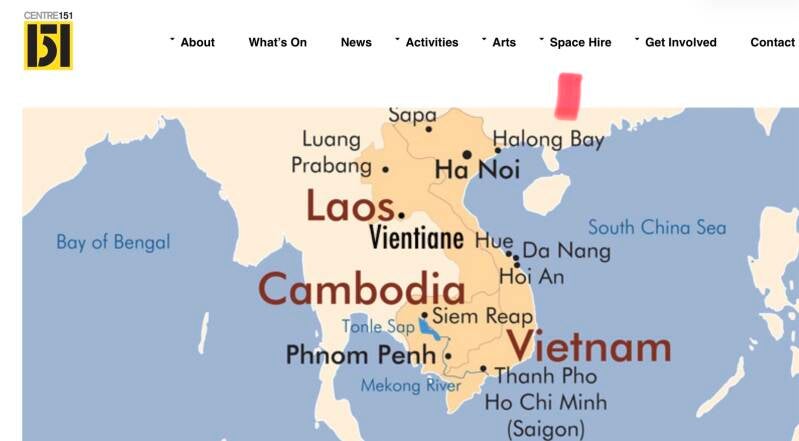
CENTRE 151
HOXTON DOCKS
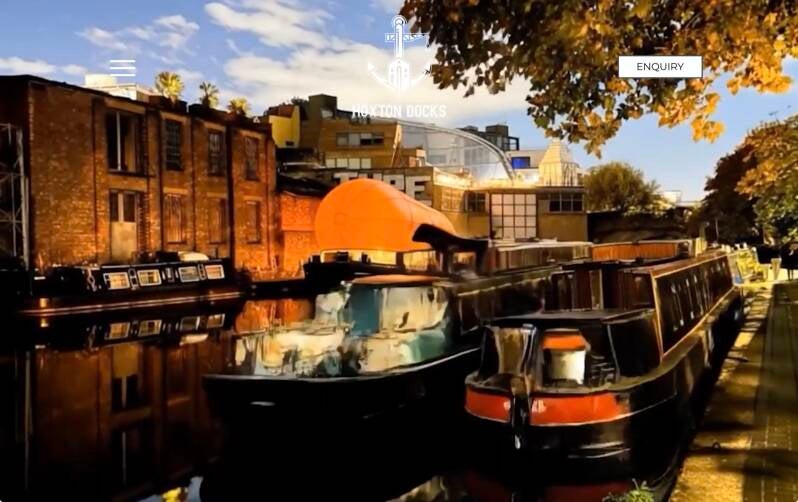
Columbia & Brunswick Wharf artists studios
“Little Hanoi”
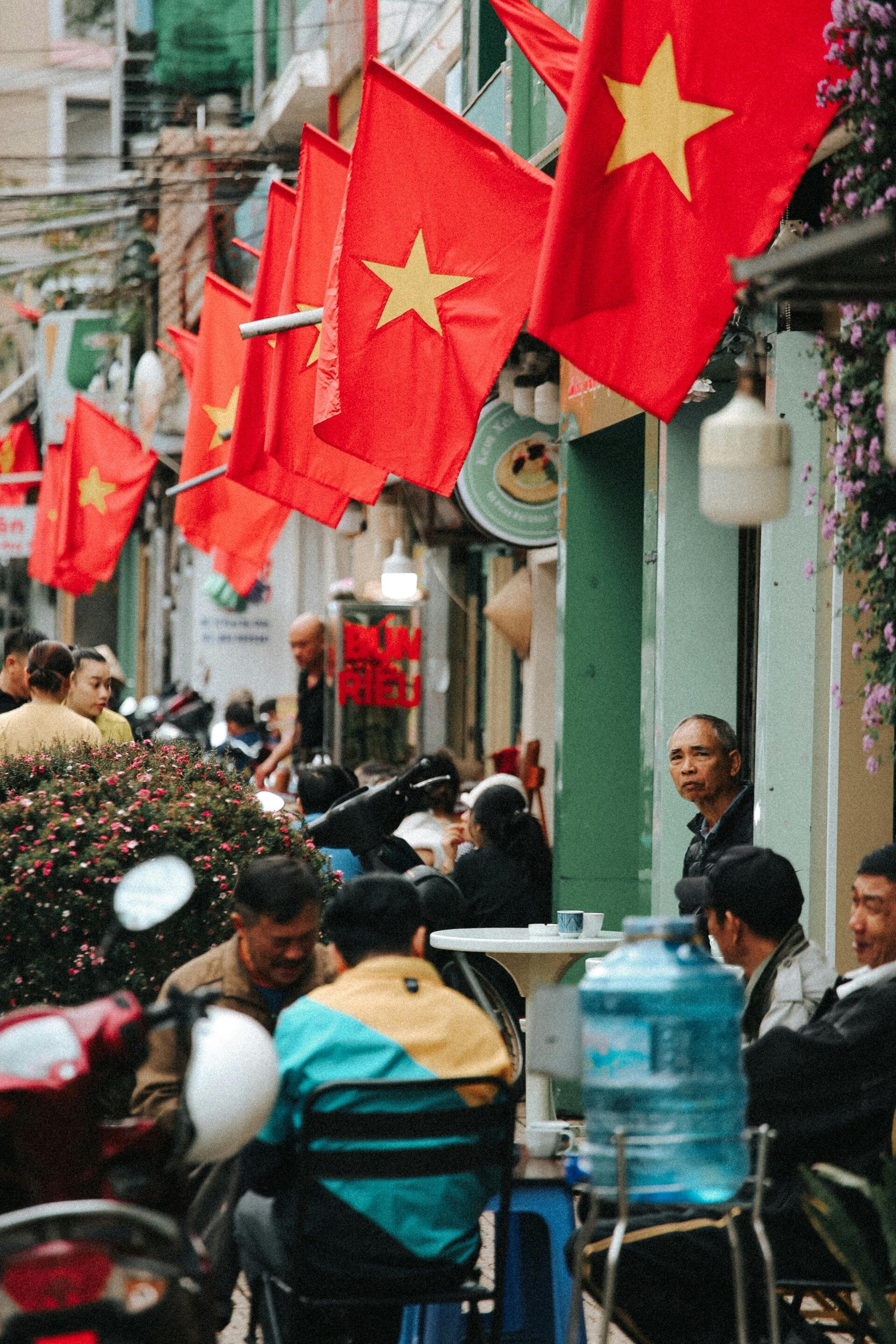
VIETNAMESE restaurants (and LAOTIAN and CAMBODJAN) you will find them in KINGSLAND RD. and MARE ST.
Some cafés in the KINGSLAND ROAD give away that there is a RUSSIAN community area.
Then, alongside GOLDSMITH ROW, where you will find some eateries and convenience stores. The road becomes PRITCHARD’S ROAD

AUDREY ST, part of HAGGERSTON PARK: The former DEPOT is listed a Sp Int Nat Con
The REGENTS CANAL
The Regent's Canal walk is a scenic, 9-mile (14 km) flat route spanning West to East London from Paddington Basin to Limehouse. Popular stretches include the peaceful 4.5-mile path from Little Venice to King's Cross—passing Regent's Park, London Zoo, and Camden Lock—and the East London route through Victoria Park to Limehouse Basin.
PADDINGTON-CAMDEN: https://anywhereweroam.com/regents-canal-walk/
Divesion West

A possible shortcut to ISLINGTON here, along REGENT’S ROW (street) with the canal towpath to your left
Diversion Easr

In case you want to divert towards VICTORIA PARK “VILLAGE”
Former Gasholders: Shoreditch Gas Works


In the eighteen-fifties, the site of the gasometers was established as a holding station for the Shoreditch Gasworks nearby, built by the Imperial Gas Light & Coke Company in 1823 on land that is now Haggerston Park, capitalising upon the facility to deliver coal by barge along the Regent’s Canal which opened in 1820. Today, only the original retaining walls of the gas works, which traverse and enfold the park, remain as evidence of this particular vanished industry.
REDEVELOPING BROMLEY-BY-BOW’s GASHOLDERS: https://www.constructionenquirer.com/2025/03/17/green-light-for-2100-homes-at-old-east-london-gasworks/
VICTORIA BUILDINGS
Commercial, with stucco dressings, red brick curved lintels, roof terrace concealed by parapet, Corinthian pilasters. Third floor entablature with finials on top of lower pilasters. Swags on round arch. Stucco surrounds, on central
VICTOR WYND MUSEUM of CURIOSITIES
The Last Tuesday Society presents the first all encompassing museum to open in London since the Horniman in 1901. The Museum will present an incoherent vision of the world displayed through wonder enclosed within a tiny space, no attempt is made at classification and comprehensiveness, instead the museum focuses on the pre-enlightenment origins of the museum as Wunderkabinett
Over Mare St.
Vyner St.
Art hub
Were you looking for a chic corner of London, where art galleries sit next to designer outlets and organic and health products retailers?. And plenty of eateries!
BROADWAY MARKET!

A busy, noisy fruit and vegetables market, every day of the week?. Well, forget about it; that was in late Victorian times. Over time, slowly, it dwindled, as happened to many other street markets in England (with the advent of a couple of famous stall holders, Mr.COHEN (the CO of TESCO), and Mr.MARX -no, not the philosopher, but the one who became MARKS, the partner of Mr.SPENCER)… so in the early 2000, here, the activity was limited to a couple of stands.
After a failed relaunching as a Sunday arts and crafts, and a weekdays general market, finally in 2004 success arrived in the form of a quality food market, street food ready to eat or fresh produce to take home. And as the area has experienced a serious a process of gentrification, foodies abound and the market took off, thanks as well to the company of some adventurous visitors.
The area has improved greatly and it is in the process of being truly regenerated. The streets are clean, as are the brick façades. Money has been spent. But that gentrification has sparked debate, for example, around how the council has disposed of its commercial portfolio. Even an occupation (of no.34) took place, to bring attention to the problem of affordable housing and commercial spaces for local people.
An overseas developer bought a spirit shop, court battles sued… Modern blocks have replaced old terraced houses… The new yuppies are buying the new studio flats.
Unfortunately, the historic F.COOKE, PIE & MASH eatery has disappeared. But GEORGE TALLETT’S fish shop is still here. THE DOVE and THE CAT & MUTTON PHs are great.
Good eateries, art galleries, art bookstores….
SUNDAY is quieter https://broadwaymarket.co.uk/directory/business-category/sunday-stalls/
EASTERN PROMISES(2007) and BUSTER (1988] were shot here.
Enjoy as well the farmers market at the PRIMARY SCHOOL
See some original, stone carved, side street names
Ada St.
ADA ST. WORKSHOPS
B.65-66. A MODERNIST building by Arch.YORKE ROSEMBERG MARDELL with the GLC Arcjt.Dept. to cater for the needs of small scale industries. Reinforced concrete frame, flint-lime brick cladding, stained brown timber window frames.
No.36 Site of a Victorian PH
Grand and ornamented
Pedimented first floor, blank windows, polished grey/black granite, in piers and rectangular capitals, small triangular pediments, string course first floor, plasterwork and marble, keystone at entrance.
DUNCAN ROAD, old sign
BONER GATE, VICTORIA PARK Saturday and Sunday markets

VICTORIA PARK VILLAGE

With the focus around Lauriston Road and Victoria Park Road, there are designer boutiques, specialist interior shops, cafes, pottery and gift shops, hair and beauty salons, pubs, bars and restaurants. Their close proximity to the park gives the feeling of a true East London village.

Back to the route, at
The BLACK PATH
Have you realised that you have been cycling or walking, all the time in a rather straight line, heading towards the NE?. Look at the map again. You are on an historical TRADEWAY linking London with the LEA VALLEY
How historical?. How old?.
According to some, the PHOENICIANS landed in would-be BRITANNIA (and ENGLAND) and had their ships moored in what we call now the POOL OF LONDON. Well before the ROMANS!. Following these theories, those Phoenicians established trade routes along the S coast of the future BRITANNIA, and the navigable reaches of the THAMES.
We are talking here the BRONZE AGE (3000 BC-500BC). The Mediterraneans did not have available tin deposits (to create alloy: copper and tin smelted) so they were forced to deal with the BARBARIANS OF THE NORTH. If this was the land of tin -BARATANAC- then it makes sense the evolution of the name BRITAIN!.
Definitely those traders had navigated the LEA, and found there, on the Valley, pasture lands and wheat fields. From there the CELTIC settlers used to drove their cattle or brought their produce to London… London?
There is a problem: we do not have a single proof of all this, not even of the actual existence of London that far away back in time!.
What we know: The Black Path links with Old St in one direction and extends beyond Walthamstow in the other, tracing a trajectory between Shoreditch Church and the crossing of the River Lea at Clapton. Sometimes called the Porter’s Way, in medieval times this was the route cattle were driven to Smithfield and the path used by smallholders taking produce to Spitalfields Market. Sometimes also called the Templars’ Way, it links the thirteenth century St Augustine’s Tower on land once owned by Knights Templar in Hackney with the Priory of St John in Clerkenwell where they had their headquarters.
No-one knows how old the Black Path is or why it has this name, but it once traversed open country before the roads existed. These days the path is black because it has a covering of asphalt.
More about Baratanac:
LONDON FIELDS
Can you imagine a a grazing spot for cattle being driven S from the HACKNEY MARSHES to the slaughterhouses of SMITHFIELD?. Well, names like LAMB or SHEEP LANES, SHOULDER OF MUTTON & CAT PH (now, it has lost the first part) are witness to the trade. In the Middle Ages it was called plain LONDON FIELD (as recorded in 1540).
It was in the 16th c. when ROMA people lived here. In 1529 THOMAS MORE (his daughter lived in TOWER HOUSE) wrote about outlandyshe people, and legislation Was prepared to order them out of the country “on pain of death”.
Cricket tournaments are recorded here since 1802. LFCC are based at the P on the P
In 1932 opened the LIDO, with its 50 m. heated pool. A red brick low building, with small cubicles and colourful doors, the changing rooms housed in identical ranges… A.ROWBOTHAM and TL SMITHSON were the architects if this MODERNISTof the LCC’s 9th Lido. The GOLDEN AGE of English Lidos…
Closed in 1988, and reopened in 2006.
In the SW corner, under the grass, some tarmac can be noticed: an anti-aircraft battery was installed here.
Sculpture: FLOWER SELLERS
HOLLY STREET ESTATE
Regency
UNITED HOUSE
Apartment building of the year
Lamb Lane
VICARAGE HOUSE to ST.MICHAEL’s and ALL ANGELS Church.
A handsome building, Early English style, unusual in early Victorian times. Designed by arch. HAKEWELL EC (known for ST.JOHN OF JERUSALEM Church). In KENTISH rag stone and yellow STOCK brick. A complex building, with several wings, multiple gable ends, tall chimneys, double and tripartite windows, with stone dressings.
The boundary wall, as well, in Kent.rags. Gateway with stone pillars.
As the Church was destroyed during the last WW, services were held here.
No.24. Georgian villa
Slate mansard roof , recessed central door, with a rectangular fanlight, topped with a bracked cornice.
The windows, with simple moulded architraves.
Iron railings. Original?
Nos.33-34. A pair of Georgian Italianate, semi-detached, unusually wide houses. Stuccoed pilasters, with cornice a pediment. Pitched slate roofs. Some original railings.
Nos 25-32. A Georgian terrace, with a parapet and a string course, uniform but partially missing. On the door and windows, double brick arches. Cast iron railings.
No. 25 has a rendered basement and GF. It is rectangular, and maybe it was build at a later date.
.
PUB ON THE PARK (originally QUEEN ELEANOR PH)
TOWER HOUSE
This was the dwelling of the ROPERS. MARGARET ROPER was de daughof THOMAS MORE. From here she would take him daily food rations, when he was prisoner in the TOWER OF LONDON.
Martello Street
MARTELLO?. Sounds Italian!
You have left behind a couple of roads or places which carry that name…
There are MARTELLO TOWERS all over the place, I mean, defensive towers along the coasts, all over the territories that had been part of the BRITISH EMPIRE. It is a GENOESE creation, just the the flag of England (I think that I will have to explain this better…). MALLORCA was never BRITISH. MINORCA was.
Let us carry on questioning: A defensive MARTELLO TOWER, in HACKNEY or near HACKNEY?.
MARTELLO HALL
You are still walking in diagonal towards the NE, alongside the BLACK PATH… here called, first, MARTELLO ST., then, HACKNEY GROVE
214-224 RICHMOND RD
3 pairs of semi-detached, in Victorian Italianate, with raised basements. A full height, central recessed arch across both houses. The doors, with side and topó lights. Around the doors, stucco surrounds. Arched windows on the 2nd floor. Decorative cornices on the bay windows. Above, wide windows with side lights.
2012. Olympic year, in Hackney
A sad anniversary, in July 2012, as the OOGG were on its way… 40 years of the MURDER of Israeli Athlets during the 1972 MUNICH OOGG. Mayor JOHNSON, British Olympian BEN HELFGOTT, Mr.EFRAIM ZINGER (Chair of the Israeli Olympic Committee) and ERICK PICKLES MP, British government Secr.of State unveiled this plaque,
ARTHAUS had been refurbished by an Israeli developer, and owner of this workspace complex ASSAF LAZNIK. And the reason they chose this building was that they wanted the plaque to be as closed to the ATHLETS VILLAGE (now, the EAST VILLAGE, QUEEN ELIZABETH II THE OLYMPIC PARK) as possible.
Why not a coffee in GO UNPACKAGED?. Or an Italian meal in LARDO?. Mind your cholesterol though!.

I hope you are enjoying this guide!

Why not donating to WIKIMEDIA FOUNDATION?


Create Your Own Website With Webador