


NEWINGTON GREEN to CANONBURY and on to BARNSBURY

Ferntower Road
Poets Road
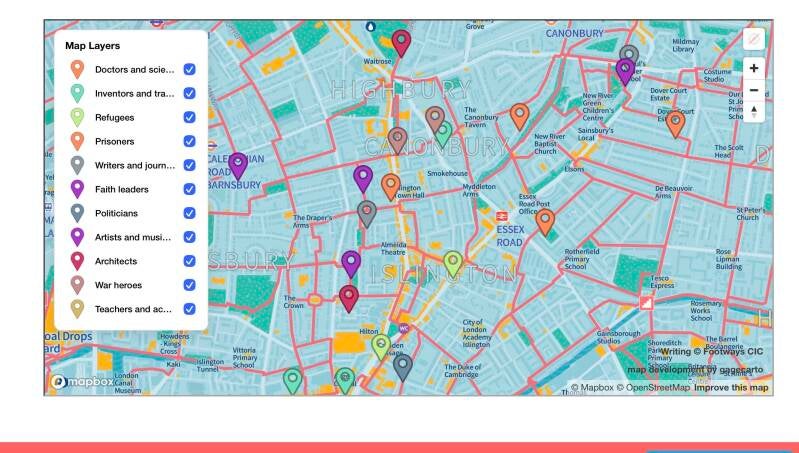
Site of the “DALSTON SYNAGOGUE” (in fact this shul was in Mildmay, Islington)
Jewish Heritage in Islington
Petherton Road
Walking or cycling above the waters: the NEW RIVER
Petherton Road sits directly above a significant section of the historic New River, which was constructed in 1613 to supply fresh water to London. The river flows in pipes beneath the road, serving as part of the scenic route that winds towards the New River Head in Clerkenwell.
The route is part of the broader New River Path, which stretches from Hertfordshire to North London.
During the 1860s the watercourse was culverted and later developed as a central green space.
Walking the whole “river”


Wallace Road
CANONBURY LO Station
Over St.Paul’s Road
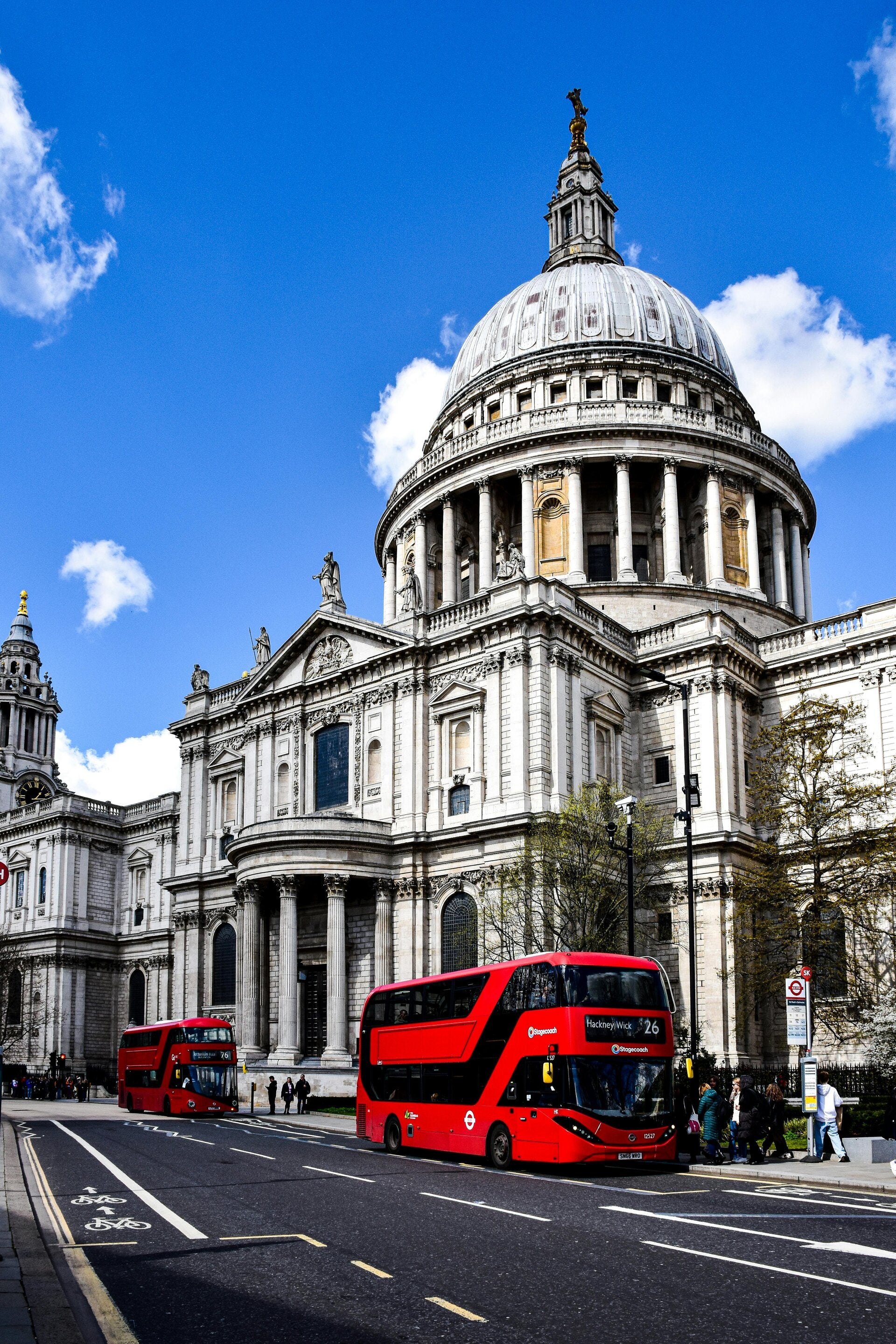
CANONBURY
From St Paul’s Road the New River openly flowed through Douglas Road, Canonbury Grove and Astey’s Row, with housing being developed alongside in the early 1800s. By the 1890s this section was covered overand the water piped to NewRiver Head. The redundant water channels were retained as attractive features until covered over and developed in the 1950s as a series of public gardens.
Douglas Road
Islay Walk
THE MARQUIS TAVERN P.H.
Willow Bridge Road
Canonbury Place
THE CANONBURY TAVERN
School
CANONBURY PLACE(CANONBURY HOUSE)
Dawkins’s account of Canonbury tells us that the first mention of the manor of Canonbury comes in the Domesday book of 1087, when it was held by ‘Derman of London’. Previously, it had been owned by a Saxon called ‘Algar’, a ‘servant’ of King Edward the Confessor’. After the conquest of England in 1066, the lands upon which the current remnants of the Tudor house stand passed into Norman ownership. Initially, Canonbury belonged to Geoffrey de Mandeville. However, after his death it became part of the ‘vast’ de Berners estates.
Then, on 15 June 1253, during the reign of Henry III, Ralph de Berners gave the ‘lands, rents and their appurtenances in Iseldone’ [Islington] to the Augustinian Priory of St Bartholomew in Smithfield. An additional 106 acres of arable and meadow land was added to the estate in 1334 by Henry le Hayward and Roger de Creton; they granted the land to the Priory in exchange for prayers for the soul of John de Kentyshton. Henceforth, it became a rural retreat for the canons of St Bartholomew; hence the manor’s name, ‘Canon’ and ‘bury’, meaning ‘mansion’ or ‘dwelling place’.
According to A History of the Country of Middlesex, the manor consisted of ‘a demesne, one free tenant, 18 customary holdings, and a mill’, with the site being further developed in 1362 when the medieval manor house was constructed. While what remains of Canonbury Place today is engulfed in the sprawling suburbia of North London, during the medieval and Tudor periods, and even in the eighteen century, before industrialisation, Canonbury Place sat in open countryside about three miles north of St Bartholomew’s Priory. Its extensive gardens and orchards would become cherished by the priory’s canons as a summer residence away from the bustle and filth of the city. These ‘men of the cloth’ no doubt enjoyed the luxury the manor house provided, including piped running water and breathtaking views from the top of Canonbury’s famous tower, which we will come to shortly.
Prior Bolton (1509-1532), whose eponymous window can still be seen at St Bartholomew’s Church, invested heavily in upgrading the medieval house. According to the sixteenth-century antiquarian John Stow, Bolton ’builded of new the manor of Canonbury’ at the beginning of the sixteenth century. Perhaps these home improvements made Canonbury Place an attractive proposition to Cromwell, who became a lessee of Canonbury as early as 1529. He was granted in fee [see Glossary] Canonbury Manor and probably a second nearby manor called ‘Cutlers’. At the Dissolution of St Bartholomew’s in 1539, the Lord Privy Seal was also given the adjoining manor of Highbury, thus making him a substantial land-owner in the area.
The TOWER
one feature peculiar to Canonbury Place has garnered the most attention from antiquarians. This is probably because the feature still stands today. It is an old brick tower, almost certainly built by Prior Bolton early in the sixteenth century.
The tower stood in the north-west corner of the original courtyard and is believed to have been separate from the main house. The attribution to Prior Bolton lies in his rebus (a bolt passing through a barrel of ‘tun’), which is still evident in one of the walls of the Tower.
The tower is 17 ft square and extends over 60 ft high. In the early 1800s, the ground floor was noted to contain a hall and a kitchen, as well as an ‘excellent’ oak staircase which extended through all storeys, giving access to 23 apartments, each with ‘convenient closets on the landing spaces’. The principal apartments were on the first and second floors and are noted to contain fine oak panelling dated to the late sixteenth century and the ownership of John Spencer. (Note: in 1925, An Inventory of the Historical Monuments in London, Volume 2, states that the tower contains only a staircase and extends only over four floors – confusing! Now, I want to see it for myself.)
Anyway, Samuel Lewis goes on to say that the views from the top of the tower are some ‘of the finest panoramic views to be found near the metropolis, embracing the adjacent parishes, the city of London and the hills of Hampstead and Highgate with the surrounding country for several miles.’ One can imagine Cromwell climbing the tower to enjoy those views.
In 1547 the manor was granted by Edward VI to John Dudley, Earl of Warwick, later Duke of Northumberland.
Queen Mary I in 1556 granted the manor to one David Broke, and in 1557 to Thomas Wentworth, 2nd Baron Wentworth
John Spencer initially leased the House and Tower from Wentworth for £21.11s.4d, and then bought it in 1570 for £2,000.
Spencer had no son but had a daughter, Elizabeth. She had fallen in love with William Compton, 2nd Baron Compton, who succeeded his father in 1589 when only 21 and went to the royal court of Queen Elizabeth, borrowing from John Spencer[21] when he had spent what his father had left him. Spencer did not regard marriage to his daughter as a suitable way of liquidating the debt, so he opposed it and confined his daughter in Canonbury Tower.[22] She and Lord Compton eloped: supposedly the young lord, disguised as a baker's boy, drove his cart over the fields to Islington and Elizabeth Spencer was lowered from a window in a baker's basket and escaped to marriage in 1599. Sir John disowned his daughter, costing the couple a fortune variously estimated at from three hundred to eight hundred thousand pounds. However, a son was born to the Comptons in 1601, and Spencer was partially reconciled through the efforts of the Queen
The young lord eventually became Lord President of the Council in 1617, and in 1618 was created 1st Earl of Northampton.

Rosicrucians, Freemasons, Bacon, Shakespeare…
Sir BASIL SPENCE lived here

CANONBURY?
CANONBURY SQUARE
Henry Leroux of Stoke Newingtonstarted building the north-west range of the square in 1805, on land owned by the Marquess of Northampton. In 1812, when few properties had been built, the New North Road turnpike, now known as Canonbury Road, was constructed and bisected the square, creating east and west sides.[1] The new road interfered with the quiet of the rudimentary square, affecting the economics of the venture and subsequently the unity of design of the
buildings surrounding it and the time taken to complete construction. The layout is rectangular with a large villa, Northampton Lodge, in the centre of the terraces on the north side. The earliest terrace differs from the rest, and none of the sides join with each other.[2] The east side bears a name-plaque at no. 28 which originally bore the name "Marquis Terrace", but it is now blank.[3]
Like other parts of Islington, from the 1860s
Like other parts of Islington, from the 1860s the area began to decline, largely because of the exodus along the railways to newer, more rural suburbs. By the end of the Second World War parts of the square had become derelict. Nos. 37-39 in the north-east section of the square were demolished, and the space created was filled with a terrace of five new houses of complementary design. From the 1960s, the square was rediscovered by middle-class families, the houses were renovated, and it became newly fashionable.
The central garden was formed in the 1840s. The 4th Marquess of Northamptonopened his private square-gardens to the public in 1884, the first land-owner to do so, and in 1888 he donated the land to the Islington Council. The original railings were removed during the Second World War and replaced by chicken-wire netting, but in the 1950s the gardens were redesigned and enclosed with new reproduction railings
- Joseph Chamberlain, statesman, attended a prep school at no. 36 in the 1840s before going to University College School.[8]
- Samuel Phelps, actor and theatre manager, known for his productions of William Shakespeare's plays, lived at no. 8 from 1844 to 1866. A commemorative plaque marks his residency.
Evelyn Waugh, writer, lived with his wife Evelyn Gardner at no. 17a from 1928 to 1930. His first two novels Decline and Fall and Vile Bodies were published while living there.[8] At that time he described it as "half a house in a slum" and "our dilapidated Regency Square".
George Orwell, novelist, essayist, journalist and critic, moved to no. 27b in the autumn of 1944, he and his wife having been bombed out of their previous flat.[11] His novella Animal Farm was published in 1945 while he was living in the square, and parts of Nineteen Eighty-Four were written in the flat.[12] He remained there with his wife and adopted child until his death in 1950. A commemorative plaque marks his residency on the top floor of the house.[13][14]In 1946 he wrote of "the decaying slum in which I live
Georges Kopp, engineer and inventor, friend of George Orwell and his brigade commander in the Spanish Civil War
DUNCAN GRANT & VANESSA BELL
Duncan Grant and Vanessa Bell, painters and designers, lived at no. 26a during the 1950s
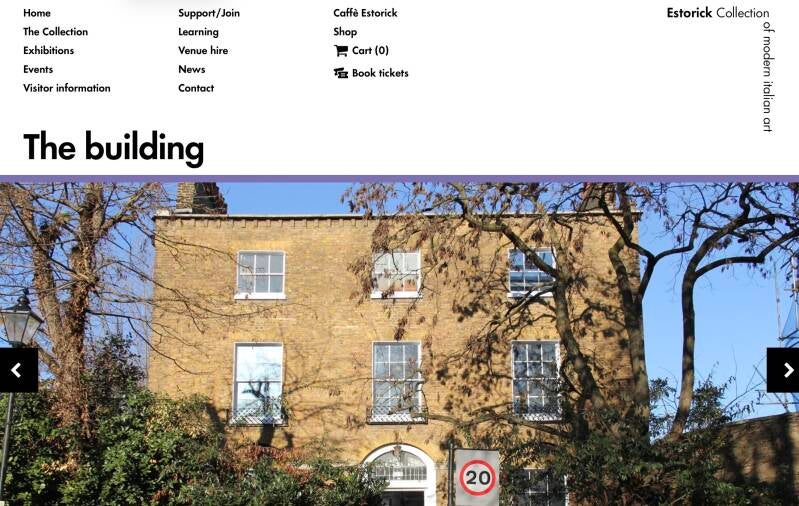
ESTORICK COLLECTION
Canonbury Lane
Compton Terrace

Detour
GEORGIAN HOUSES
UNION CHAPEL
V1 hit
HIGHBURY C0RNER

Create Your Own Website With Webador