


From ISLINGTON, through CLERKENWELL and the CITY, to BLACKFRIARS BRIDGE


Duncan St.
Former MAGISTRATES COURT
Over Duncan Terrace
GEORGIAN TERRACES
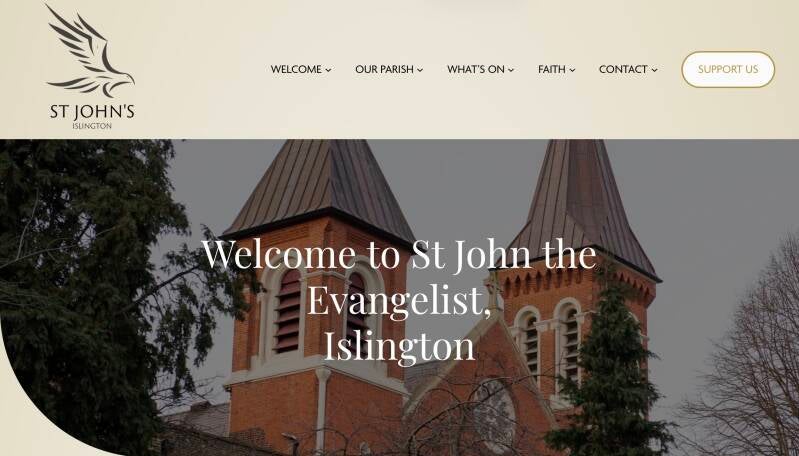
R.C. Church of St. JOHN THE EVANGELIST
Colebrook Row
GEORGIAN TERRACES
Former NEW RIVER course
REGENT’s CANAL. Entrance to the ISLINGTON TUNNEL
Over City Road

DALBY HOUSE
The area where Goswell Road and City Road meet was anciently common land that was used for, among other things, prize fighting and executions. Housing development ended that use and in 1803, Dalby Terrace (or “Dalby Tarrace”, according to the original ceramic name plate, still in place) was built by a certain Mr Dalby (first name unknown), who retained the end house, suitably named Dalby House, for his own use. Mr Dalby was a manufacturer, who was credited with the invention of a successful beer pump.
JUBILEE CLOCK
Over Goswell Road
Owen St.
Owen’s Fields
Site of DAME OWEN SCHOOL
St.John St.

Detour: ISLINGTON MUSEUM

Former THE CROWN and WOOLPACK P.H. (now hairdressers): site of Russian political meetings

Welcome to Clerkenwell!
Islington Hill: the New River Estate
The New River Company was the owner of the large New River Estateat the top of the Islington Hill. Until 1904, the Company managed the New River, a man-made water channel which carried drinking water for 20 mi (32 km) to London from the Chadwell and Amwell Springs near Ware in Hertfordshire. It opened in 1613 and fed reservoirs in Islington.
By 1818, the Company had decided to develop the estate, including a residential square and a church. The site was a to develop the estate, including a residential square and a church. The site was a large field called "Butcher's Mantells", near to the Upper Pond reservoir where Claremont Square was built at the same time.[2] The estate was laid out and developed by the Company's architect and surveyor, William Chadwell Mylne,[3]who also designed St Mark's Church at the centre of Myddelton Square.
Chadwell St.

Detour: Arlington St
SADLER’s WELLS Theatre

Myddelton Sq.
GEORGIAN TERRACES
St.MARK’s Church
Myddelton Passagr
A WALL… some CRAVINGS…
NEW RIVER HEAD
This site served as the main distribution hub for the water, featuring reservoirs, filter beds, and a windmill to supply London.
New River History Panels
Former PUMPING STATION, now The QUENTIN BLAKE CENTRE FOR ILLUSTRATION. Opening 2026

The Centre establishing a new, permanent, £12.5m home at the historic New River Head pumping station in Clerkenwell, London, scheduled to open in May 2026. The site, featuring a Grade II listed engine house and 18th-century infrastructure, will house the artist’s 40,000-piece archive, galleries, a café, and community gardens.
River St.

Detour to the LLOYD BAKER ESTATE

Amwell St.
Margery St.
Wilmington St.
CHARLES ROWAN HOUSE
Build in 1928-30 for married policemen and their families. It was designed by Gilbert Mackenzie Trench, architect and surveyor to the Metropolitan Police, and named after Sir Charles Rowan, the army officer appointed by Robert Peel in 1829 as one of two commissioners to organise London's police force.
Merlin St.
A specific part of the SPA FIELDS featured a venue called "Merlin's Cave," which served as a platform for political speeches, including the infamous Spa Fields riots/meetings of 1816–1817
MERLIN’s CAVE
Merlin’s Cave in Pentonville was a real place but it was much more a shrine to boozing and cavorting than it was to any Arthurian characters. At the start of the 17th century, three cottages were built on the open high ground roughly where Merlin Street is now. One of the cottages was converted into a tavern known as The Hutt, but by 1737 it was renamed Merlin's Cave.
Overlooking Spa Fields, with a long room, skittle alley and gardens, it was an attraction for the holidaymakers taking a break from central London amongst the wells, spas and open fields of Islington.
As green Islington was built over, a New Merlin's Cave appeared on Margery Street in 1851. It lasted for most of the 20th century and, from the 1970s, become famous as a jazz venue.
Wilmington Sq.
Tysoe St.

Nearby
Former METROPOLITAN WATER BOARD
Former FINSBURY TOWN HALL
Roseberry Avenue
Spafield St.
Exmouth Market (street)
Where is the market?

OUR HOLY REDEEMER Church


The world’s first clown, JOE GRIMALDI, was born here
Spa Fields
A 17th-century spa and 18th-century "tea garden" became a notorious burial ground and eventually a public open space.

Create Your Own Website With Webador