


SOUTHWARK BRIDGE BANK OF ENGLAND OLD SPITALFIELDS MARKET


VINTNERS HALL
The Vintners' Company, with its first Charter in 1363, is one of the Twelve Great Livery Companies of the City of London.
Wool and wine were the two prominent trades of the Middle Ages.
Vintners' Hall is the spiritual home of the international wine trade because its owner, the Worshipful Company of Vintners, is one of London's oldest medieval guilds, granted a royal charter in 1363 to control wine import and trade, establishing it as the historical heart and regulatory body for centuries
The twentieth century was marked by a steady progress towards the Company’s renewed interest in and support for its trade, culminating in the granting of a new Charter on the 20th August 1973.
This Charter authorised the Company to set up the Wine Standards Board to which the Government had delegated certain responsibilities for enforcing the E.U. wine laws. The Wine Standards Board transferred to the Food Standards Agency in 2006 and the Company’s association with it ceased.
In 2006 the Company began an association with the Wine and Spirit Trade Association.
Naturally, the Company’s interest in its trade does not end there. Having been instrumental in setting up both the Wine and Spirit Education Trust and the Institute of Masters of Wine, the Company devotes a proportion of its resources to furthering wine education.
In 2007, the Company provided funds for the “Vintners’ Room” as part of the Wine Studies Centre at Plumpton College in East Sussex, which now has its own Wine Studies Degree.
The Company’s principal charitable vehicle is the Vintners’ Foundation, which provides assistance to charities concerned with the relief of the poor, destitute and homeless in Greater London; charities treating the social effects of alcohol abuse or misuse, and support to young people, youth projects and designated educational establishments in London.
Free Vintners
The ancient privilege of "Free Vintners," historically held by Freemen of the Worshipful Company of Vintners in London, allowing them to sell wine without a magistrates' license, confirmed by James I in 1611, though the extent of this exemption was limited and eventually abolished for general use by the early 2000s, leaving only remnants like the historic Boot & Flogger wine bar in Southwark as examples of its past power.
GORDON’s: https://www.gordonswinebar.com/history/
BOOT AND FLOGGER: https://www.davy.co.uk/wine-bar/boot-and-flogger/
Former THAMES HOUSE, now FIVE KINGS HOUSE
It was built in 1911 by Thomas Collcutt and Stanley Hamp for Liebig's Extract of Meat Company.
Wikipedia says about LIEBIG’S COMPANY:
In 1862, George Christian Giebert, a young German railway engineer visiting Europe, read Liebig's Familiar Letters on Chemistry. Convinced that the process could be industrialized, he wrote to Liebig to suggest opening a manufacturing plant in South America. Using the flesh of cattle that, before the popularity of canning or freezing meat, would otherwise have been killed for their hides alone, he hoped to produce meat extract at one third of the European cost.
With Liebig's agreement, and the backing of a group of entrepreneurs and ranchers, Giebert established the Societé de Fray Bentos Giebert & Cie., and built a test extraction plant at Villa Independencia, Uruguay, later called Fray Bentos. By the end of 1864, 50,000 pounds of extract worth £12,000 had been exported and sold.[7]: 223–227 In 1865, Giebert offered Liebig a directorship of the company
What about FRAY BENTOS and OXO?
The British tonic wine Wincarnis originally contained Liebig's meat extract and was initially called Liebig's Extract of Meat and Malt Wine.[22] Beaufoy & Co of Lambethalso produced a meat and malt tonic wine (with quinine) using Liebig's meat extract.[23]
The company also worked with English chemist Henry Enfield Roscoe to develop a cheaper meat extract product which it commercialized some years after Liebig's death. "Oxo" was registered as a trade mark in many countries. Originally a liquid, Oxo was released as a bouillon cube in 1911
In 1873, Liebig's began producing tinned corned beef, which it sold under the label Fray Bentos.[13] "Fray Bentos" was trademarked by Liebig in 1881 to market "Fray Bentos Compressed Cooked Corned Beef".[17] With the introduction of freezer units, the company was eventually able to produce and export frozen and chilled raw meat as well. The amount of food processed and shipped around the world caused the town of Fray Bentos to be called "The Kitchen of the World"
And explore Fruiterers Passage
Over Upper Thames St.
Queen St.

Nearby, both sides of Queen St. First W then E
Skinners Lane
Little Trinity Lane
Garlick Hill
The name originated at the now-lost dock or jetty known as Garlickhithe, that is the dock where garlic was landed and sold in a tradition dating back to at least the 13th century. It’s one of numerous thoroughfares in the City named for what was traded there.
Site of BEAVER HOUSE
ST.JAMES GARLICKHITHE Church
A swan-upper of the Vintners Coompany
College Hill – The Street With Four Plaques
Site of TURNERS’ HALL
GEORGE DE VILLIERS 2ond DUKE OF BUCKINGHAM lived on this site
Statesman and poet. Born at the family home Wallingford House (where the Old Admirality Building now is). A baby when his father, the 1st Duke, was assassinated, he was brought up alongside Charles I's own children, the future kings Charles II and James II. Not surprisingly he was a Royalist in the Civil War, and, via Scotland, went into exile with Charles II. At the Restoration he joined the court and was influential in government until 1674 when his Catholic sympathies caused his downfall.
Site of RICHARD WITHINGTON house
ST.MICHAEL PATERNOSTER ROYAL Church. WHITTINGTON’s Church
Living next door, Whittington paid for the rebuilding and enlargement of the church St Michael Paternoster Royal. Upper Thames Street is where the river bank used to be so house and church were very close to the river.
Two suffixes: PATERNOSTER and ROYAL. A ROYAL church here?
The suffix comes from its location on Paternoster Lane, (now College Hill), which, in turn was named after the sellers of paternosters – or rosaries – based there. The suffix Royal is first recorded in the next century and refers to another nearby street, now vanished, called Le Ryole, which was a corruption of La Reole, a town in Bordeaux. This street was so named due to the presence of numerous wine merchants.
- 1152): Following Eleanor of Aquitaine’s marriage to Henry II, Bordeaux became a Duchy of the English crown, sparking a 300-year partnership.
- Medieval Trade: By the 13th century, England imported approximately 80,000 tonneaux of wine annually from Bordeaux.
- Gascon Merchants (1300): In 1300, half of Bristol’s wine trade was controlled by Gascon merchants who often lived in England temporarily to manage sales.
- Shift in Control (1453–1500s): The loss of Gascony to the French in 1453 slowed trade, though it continued. By the 16th century, Marian administrators increased taxes on French wine by 1800%, reducing imports.
WHITTINGTON’s LONGHOUSE
Whittington funded the construction of a massive toilet with seats for 128 people. Opened in 1421 Whittington's Longhouse was probably located just the other side of Upper Thames Street - we'd guess it was right on the river. And it would seem likely that he gave some of his own land for the purpose.
SIR RICHARD “DICK” WHITTINGTON
Discover more Livery Company Hall in the area
INN-HOLDERS
TALLOW CHANDLERS
SKINNERS
Cloak Lane
Dowgate Hill
It's where the RIVER Walbrook once flowed into the Thames, duly defended by a barrier called the Dowgate, "dou" being the Anglo-Saxon word for water.
Over Cannon St.
Walbrook (street)
The usual interpretation is that the now subterranean stream name comes from weala broc meaning "brook of the foreigners" (usually taken to mean the native Britons, who were also referred to as the Welsh).[1][2] This suggests that there was a British speaking quarter in the city in the Anglo-Saxon period, and this possibility has been linked to the division of the city by the Walbrook, with claims that the Britons lived on Cornhill to the east, while the Saxons lived on Ludgate Hillto the west.
BLOOMBERG HQ. (IT and Roman tablets)
opened in 2017. It is owned by Bloomberg L.P. and functions as their European headquarters. It is at 3 Queen Victoria Street, to the west of Walbrook, on the site previously occupied by Bucklersbury House. The building was designed by architects Foster and Partners.
consists of two buildings, divided by a covered arcade. The buildings are linked by bridges. The arcade contains several restaurants, and reinstates part of Watling Street, an ancient Roman road.[2] Prior to construction, archaeological digs at the construction site yielded a collection of Roman-era inscribed wooden writing tablets now known as the Bloomberg tablets.
The archaeological site had previously yielded a 3rd-century Temple of Mithras, which was partially excavated in the 1950s, but this effort was incomplete, and Bucklersbury House, a 14-storey modernist office block, was built atop the site in 1953. However, the demolition of the Bucklersbury building in 2010 gave archaeologists a chance to reopen the dig. Between 2010 and 2013, a multitude of artefacts were discovered at the site, including the Bloomberg tablets, discovered buried 40 feet underground.
TEMPLE OF MITHRAS
Mithraism was a secretive, all-male mystery cult in the Roman Empire (1st–4th centuries AD) centered on the deity Mithras, often depicted slaying a bull (tauroctony). Popular among soldiers, merchants, and civil servants, it featured seven initiation grades, subterranean temples (Mithraea), and communal meals, declining with the rise of Christianity
Church of ST.STEPHEN WALBROOK
Polutry (street)
THE NED
ELIZABETH FRY lived here
GROCERS
Bank Junction

MANSION HOUSE
BANK OF ENGLAND
ROYAL EXCHANGE
STATUE OF THE DUKE OF WELLINGTON
WAR MEMORIAL
STATUE OF GREATHOUSE
New Court (street)
ROTHSCHILD BANK Hq.
Rothschild investment bank has been based here since 1809. The current building is the fourth incarnation of the Rothschild offices at the same street address.
Rothschild & Co SCA is a multinational private and alternative assets investor, headquartered in Paris, France and London, England. It is the flagship of the Rothschild banking group controlled by the French and British branches of the Rothschild family.
After leaving Frankfurt, Nathan Mayer Rothschild needed a location where he could build his banking business and continue his merchant activities as well as house his family. Rothschild acquired a lease at No. 2 New Court Street, St Swithin's Lane in 1809.
In 1824 at New Court, Nathan Mayer Rothschild and company formed Alliance Assurance
On 12 September 1919, New Court became the location where the global price of gold was fixed (until 2004)
Tapestries
Notably large-scale black-and-white designs created by OMA (Rem Koolhaas's firm) in collaboration with TextielLab, reflecting both history and contemporary design, using diverse yarns like wool, linen, and metallics
Lombard St.
ST.MARY WOOLNOTH OF THE NATIVITY Church
It is believed that the name "Woolnoth" refers to a benefactor, possibly one Wulnoth de Walebrok who is known to have lived in the area earlier in the 12th century, or perhaps Wulfnoth Cild, a South Saxon nobleman and grandfather of King Harold Godwinson.
The church was rebuilt by the Commission for Building Fifty New Churches. Work began in 1716[7] and the new church was reopened for worship on Easter Day 1727. It was commissioned from Nicholas Hawksmoor,[8] who had responded with one of his most distinctive and original designs. He benefited greatly from having an unusually open area in which to work. The old church had been hemmed in by shops and houses, like many other City churches, but these were demolished at the same time as the church.
John Newton, evangelical, anti-slavery campaigner and hymnist, was incumbent here from 1780 to 1807. William Wilberforce, anti-slavery campaigner, worshipped here.Edward Lloyd, founder of Lloyd's of London, is memorialised here.
Anne (Marbury) Hutchinson, noted American colonial woman, married William Hutchinson here in 1612
The site played a significant role during the abolition of slavery. The Brooke Slave Ship Diagram was printed in the same street as St Mary Woolnoth. Abolition meetings were held by William Wilberforce and John Newton at St Mary. John Newton was buried here after the abolition act was passed.


It is currently used by London’s German-speaking Swiss community and is also the official church in London for the Government of British Columbia, Canada.
Tube
Between 1897 and 1900 the City & South London Railway (C&SLR) built Bank Underground station beneath the church. The C&SLR were given permission to demolish it, but public outcry forced them to reconsider: the company undertook to use only the subsoil instead. The crypt was sold to the railway and the bones were removed for reburial at Ilford.[citation needed] The walls and internal columns of the church were then supported on steel girders while the lift shafts and staircase shaft for Bank station were built directly beneath the church floor.
Lombard St.

The street name refers to the business of Italian moneylenders generally referred to as "Lombards" (in medieval times Northern Italy was referred as Lombardy, a much larger region than the modern Lombardy). Lombard lenders became active throughout Western Europe in the 13th and 14th centuries, emigrating from major merchant centers in Tuscany such as Florence, Lucca and Siena,[1]: 63 and in Northern Italy such as Milan or Genoa but also from smaller cities such as Asti in Piedmont.[2]: 134 They often displaced the French Cahorsins, even though there is much confusion in documentary sources between the two communities
The term was often used in a derogatory sense, as Lombard banking was associated with the sin of usury.
A Catholic prohibition on profit from money without working made most forms of lending sinful. Pope Leo I forbade usury by canon law. Even so, it was not per seforbidden to take collateral on loans. Pawn shops thus could operate on the basis of a contract that fixes in advance the "fine"
they had filled the void left by expelled Jewish moneylenders, offering credit and financing for growing trade and royal needs, especially after England relaxed usury laws. Settling in the street that still bears their name (Lombard Street), these skilled moneylenders and goldsmiths developed banking practices, bringing Italian terms like 'bank' (from 'banco') and 'cash' (from 'casa') and establishing the foundation for modern finance in England.
The prominent position of the Lombards in Christian finance eroded with the Protestant Reformation. In the 18th century many bankers and shipping agents in England were Quakers. The term "Lombard" for pawnshop (or pawnshop owner) remained in use well into the late 18th century
Jews, Lombards, Jews, Quakers
In the 18th century, Quakers (the Society of Friends) became dominant figures in banking and lending due to a combination of legal exclusion from other professions and a religious reputation that fostered essential financial trust.
The primary reasons for their prominence in lending included:
- Legal & Educational Exclusion: Under the Act of Toleration 1689, Quakers were granted freedom to worship but remained barred from universities and lucrative professions such as law, medicine, and the military. This forced them into commerce and trade as their only viable career paths.
- Reputation for Trustworthiness: Banking in the 18th century relied heavily on personal trust ("my word is my bond"). Quaker religious tenets emphasized honesty, integrity, and the prompt payment of debts. Merchants often preferred Quaker lenders because they were perceived as more honest and less likely to engage in "scams".
- Communal Support and Networks: The Society of Friends operated as a tight-knit, closed-network "club". They provided internal capital to members and strictly regulated local businesses to prevent bankruptcy. This communal oversight ensured that Quaker businesses remained solvent and reputable.
- Frugality and Capital Accumulation: Quaker values promoted diligence, early rising, and the avoidance of gambling or excessive drinking. While many of the contemporary upper class spent wealth on social status, Quakers lived frugally, allowing them to reinvest profits and accumulate significant capital for lending.
- Founding of Modern Institutions: These factors led to the creation of several major financial institutions that still exist or formed the basis of modern banking, including:
- Barclays Bank: Traced back to Quaker goldsmiths in 1690.
- Lloyds Bank: Founded in 1765 by Quaker ironmaster Sampson Lloyd.
- Gurney's Bank: A prominent Quaker family bank that eventually merged into Barclays.
Hanging Signs
The hanging signs on Lombard Street in the City of London are historic, gilded emblems that have marked the area's role as a center for banking and finance since the 17th century. Originally used to identify businesses before widespread literacy and standardized street numbering, these signs now function as artifacts of the area's financial history. While common in the 17th century, these signs were largely removed after the Great Fire of London due to fire risks. They were reinstated, with about 23 erected, for the coronation of King Edward VII in 1902.
The Grasshopper (No. 68): The most famous sign, a golden grasshopper with the initials "TG," represents Sir Thomas Gresham, a 16th-century financier. It marks the site of his former premises and is historically linked to Martins Bank.
The Spread Eagle (No. 54): Historically marked the premises of Barclays.
The Crown and Kings, were used by various banking firms.
Change Alley
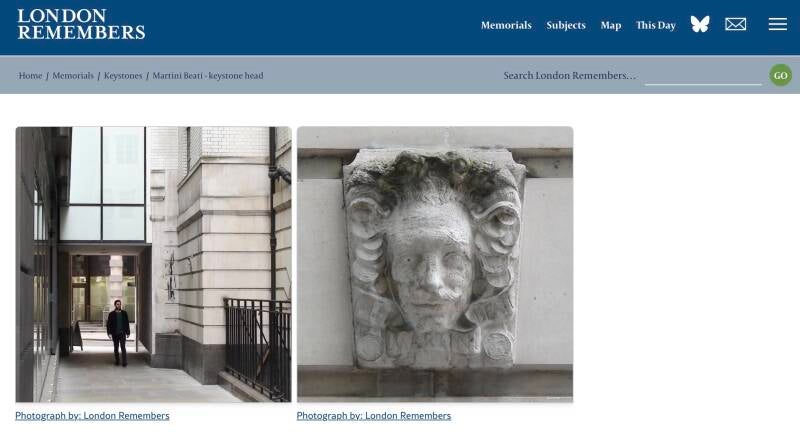
“Martini Beati”?
Birchin Lane
Castle Court
SIMPSON’s
THE GEORGE AND VULTURE
Bengal Court
St. Michael’s Alley
JAMAICA INN wine house
George Yard
Bell Inn Yard
Gracechurch St.
Gracechurch Street in the City of London was a major hub for Elizabethan coaching inns and served as a crucial transport artery, particularly for routes heading north and to East Anglia. These inns often featured large courtyard spaces that served as early playhouses for acting troupes.
Key Elizabethan coaching inns on or around Gracechurch Street included:
- The Crosse Keys: Located at 9 Gracechurch Street, this was a famous 16th-century inn licensed to stage plays, where Shakespeare’s troupe, the Chamberlain's Men, and comedian Richard Tarlton performed. It was a major coaching hub in the 1800s, serving roughly 40 coaches a day before being demolished. The site is currently occupied by a JD Wetherspoon pub of the same name.
- The Spread Eagle: Situated on the opposite side of Gracechurch Street from the Crosse Keys, this was another prominent inn, with records of its existence dating back to at least 1637. It was a key commuter hub for bankers in the 1760s.
- The Bell Inn: Located at Bell Inn Yard, Gracechurch Street (1576–94), this was another significant coaching establishment in the area.
- The Cross Keys (separate): A distinct, separate inn with the same name also operated on Gracechurch Street, recorded between 1637 and 1738.
Characteristics of Gracechurch Street Inns:
- Usage: They served as crucial stops for food, drink, and rest, with multi-story, galleried buildings overlooking stables in the yard.
- Entertainment: Due to their large courtyards, many of these inns, such as the Crosse Keys, doubled as performance venues for acting companies.
- Fate: Most were demolished in the 19th century due to the rise of the railways, which rendered horse-drawn coaching obsolete.
Site of THE BELL INN

A Hay Market?
Grass Church', referring, according to Gerald Cobb, to the site of a hay market nearby.
LEADENHALL MARKET
Lime St.
Lime Street in Elizabethan London was a key hub for a "patchwork scientific community" of naturalists, herbalists, and apothecaries, famously detailed in Deborah Harkness’s The Jewel House. It was not merely a street for trading commodities, but a center of intellectual exchange in the 16th century.
Key Figures and The Lime Street Community
- The "Lime Street Community": This was a network of naturalists, plant enthusiasts, and apothecaries living near Lime Street who exchanged correspondence, seeds, and specimens with peers across Europe.
- John Gerard (1545–1612): A prominent figure in this group, Gerard was a skilled herbalist and author of the famous Herball, or Generall Historie of Plantes (1597).
- Mathias de l'Obel (1538–1616): A Flemish physician and botanist who worked closely with Gerard, exchanging plants and knowledge.
- James Cole (1563–1628): A silk merchant and Fleming living on Lime Street, he was a key patron and collaborator within this community, marrying his second wife, Louisa de l'Obel (Mathias's daughter), in 1606.
Significance of the Area
- Cosmopolitan Hub: The area was home to a diverse group of English, French, Flemish, and Italian residents, facilitating the rapid transfer of botanical knowledge.
- Nature and Science: The residents combined theoretical learning with practical, empirical work—growing, testing, and describing plants, rather than just relying on ancient texts.
- Location Characteristics: In the 16th century, Lime Street had a relatively low population density for the era, allowing for larger homes and gardens suitable for cultivating rare specimens.
Contextual Factors
- The Plague: Herbalists of this period, including those in the City, were essential in creating remedies to battle the plague, such as using rue, sage, and, ironically, products sold by local merchants.
- The Herbals: This era saw a boom in the publication of herbals, with over two dozen editions appearing between 1525 and 1640.
The Lime Street community played a vital, often unrecognized, role in shaping the scientific revolution, moving away from pure adherence to classical medicine toward hands-on, empirical, and collaborative research.
LLOYD’S OF LONDON
THE SCALPEL
THE CHEESEGRATER
1 UNDERSHAFT
THE GHERKIN
Nearby


Bevis Marks
BEVIS MARKS Synagogue
Houndsditch
Cutler St.
Former CUTLER STREET WAREHOUSES, now DEVONSHIRE SQ.
ORIENTAL CARPETS WAREHOUSING here:https://www.orient-rug.com/blogs/news/introduction-early-history-and-development-of-the-pla-bonded-carpet-warehouse
Site of the shoot out that led to the SIDNEY STREET SIEGE
The plan was to burgle the jewellers at 119 Houndsditch by breaking in from the house behind (rented for the purpose), which fronted onto Cutler Street, opposite this plaque.
Nearby
Devonshire Square
Former GEORGIAN houses
Site of “FISHER’S FOLLY”: the “school of poets”
Welcome to the East End
Middlesex St. Originally, PETTICOAT LANE
The famous PETTICOAT LANE market!
Nearby
Former HQ of the JEWISH BOARD
SANDYS ROW Synagogue
Bell Lane
Brune St.
JEWISH SOUP KITCHEN
Tenter Ground
Weavers
Former TRACEY EMIN’s art studio
Crispin St.
Former HOSTEL
Nearby
Artillery Lane and Passage
GEORGIAN SHOP
Gun Lane
Artillery… Guns… Old Artillery Practice Grounds
LEON GREENMAN, an Englishman in Auschwitz, born here
- Leon Greenman was born on December 18, 1910, at No. 50 Artillery Lane, Spitalfields, East London.
- Survivor Story: Known as "An Englishman in Auschwitz," Greenman was a British citizen living in Rotterdam, Netherlands, when he was arrested. Despite his British passport, he was deported to Auschwitz-Birkenau along with his wife, Else, and their young son, Barney.
- Survival: Upon arrival at Auschwitz, his wife and son were immediately sent to the gas chambers. Greenman survived by being selected for labor, largely due to his physical fitness from boxing.
- Post-War: After being liberated, he returned to London and dedicated his life to sharing his experiences and educating others about the Holocaust, becoming a prominent witness to the horrors of the camp.
OLD SPITALFIELDS MARKET

Nearby
“Mother of Methodism”
Susanna Annesley Wesley (1669–1742), often called the "Mother of Methodism," exerted a foundational and lifelong influence on her son, John Wesley, shaping his personal discipline, theological development, and the structural organization of the Methodist movement.
1. Educational and Personal Discipline
Susanna implemented a rigorous and systematic upbringing that became the blueprint for John’s later "methodical" approach to faith.
- Methodical Living: She mandated strict schedules for eating, sleeping, and learning, instilling a "regular method of living" from birth.
- Academic Rigor: She provided John's primary education at the Epworth rectory, teaching him Greek, Latin, and logic. She notably insisted that her daughters receive the same education as her sons, a principle of gender equality in education John later adopted at Kingswood School.
- One-on-One Mentorship: Susanna dedicated an hour each week to meet individually with each of her children to discuss their spiritual state—a practice that likely influenced the Methodist "class meetings" and "bands".
2. Theological Influence
Susanna was a sophisticated theologian who continued to guide John well into his adulthood.
- Fusion of Traditions: Raised in a Puritan household but later joining the Church of England, she blended Puritan piety with Anglican orthodoxy. This "practical divinity" heavily influenced John’s theology of holiness and sanctification.
- Intellectual Sparring: She engaged John in deep theological debates through extensive letters while he was at Oxford, advising him on the "real presence" in the Eucharist and criticizing his early views on salvation as too reliant on personal effort.
- Individual Conscience: Her independent decision to leave her father's Nonconformist church at age 12 for the Church of England modeled the "independence of conscience" that John displayed when he eventually broke with Church of England protocols.
3. Ministerial and Strategic Guidance
Susanna’s practical actions directly shaped the early Methodist movement's controversial practices.
- Approval of Lay Preaching: When John initially objected to unordained laymen like Thomas Maxfield preaching, Susanna famously warned him, "Take care what you do... for that man is as much called to preach the Gospel as you are". This advice led John to embrace lay preaching, which became the movement's engine of growth.
- Women in Leadership: While the rector (Samuel) was away, Susanna held kitchen prayer meetings for up to 200 neighbors. John witnessed her defense of this "unconventional" female leadership against clerical criticism, which later influenced him to allow women to lead Methodist classes and eventually to preach.
- Field Preaching: When John hesitated to follow George Whitefield’s lead in preaching outdoors, Susanna encouraged him to "preach wherever the people will listen" if he believed the call was from God.
Commercial Road
Create Your Own Website With Webador