


SPITALFIELDS MARKET to BRICK LANE and on to COLUMBIA ROAD
THE TEN BELLS P.H.
CHRISTCHURCH
“ITCHY PARK”
Fournier St.
WEAVERS’ HOUSES. GEORGIAN SPITALFIELDS
No.14
mansion house, built circa 1726 by "carpenter and gentleman", William Taylor, for his own occupation but subsequently leased by silk weavers, "Signeratt and Bourdillon".[5] It has three floors and a large garret attic which once contained the loom. It is here that the silk for Queen Victoria's Coronation gown was woven.[6] The unique hardwood staircase balustrade is carved to display fluted columns with Ionic capitals placed on each turn for one hundred steps. Indeed, each step is expertly carved with a masterly design of hops, barley, and wild roses
No.23
perhaps the best surviving example of a classic, single-fronted early Georgian town house of simple but elegant design. This house retains the original, typical arrangement of cellar-basement, three brick storeys and a mansard garrett with a weather boarded front and wide weaver's windows
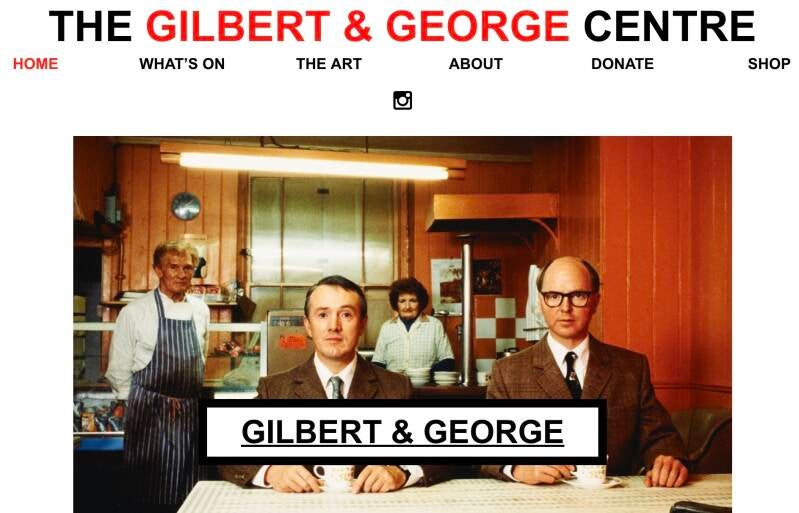
No.8. GILBERT AND GEORGE live here
CHURCH, SYNAGOGUE, MOSQUE
constructed as a Huguenot Chapel ('La Neuve Eglise') in 1743–4, had also served as a School. In 1898 the Methodist Church at the eastern extremity of Fournier Street was converted into the Machzike Hadath Synagogue.would later be converted during the 1970s to become the London Jamme Masjid (Great Mosque)[9]as the area then evolved to become the present day heart of the Bengali community.
Brick Lane
Nearby
THE PRIDE OF SPITALFIELDS P.H.
The Parish School
CURRY HOUSES
The BANGLADESHI COMMUNITY

Princelet St.
No.19
OLD TRUMAN BREWERY
The name was taken from the street on the north of the site, Black Eagle Street, now the east-west section of Dray Walk. A Truman took over the business in 1679 and the business expanded. 1789 it was taken over by Sampson Hanbury (1769-1835) uncle to Robert. Another of his nephews, Thomas Fowell Buxton, joined the company in 1808. By 1816 the company was named Truman, Hanbury, Buxton & Co, and on Hanbury's death in 1835 Buxton took it over. By 1853 the brewery was the largest in the world.
In 1873 the company expanded into Burton where the water was particularly suitable for brewing. The Brick Lane site continued in operation but production gradually moved to Burton. Take-over by the Grand Metropolitan Group in 1971 and merged with Watney Mann in 1972. In 1989 Brick Lane closed. Since then it has been redeveloped as the Old Truman Brewery, with offices, shops, restaurants,
THOMAS FOWELL BUXTON.MP, brewer, slave abolitionist and social reformer
Entered the Brick Lane brewery Truman, Hanbury & Company in 1808, eventually taking on sole ownership. 1807 married Hannah Gurney, Elizabeth Fry's sister. A Quaker he supported Fry in her prison reform efforts, worked for the abolition of the slave trade, taking over from Wilberforcewhen he retired. Founding chairman of the RSPCA in 1824.
commemorated with a fountain in VICTORIA TOWER GARDENS
Jewish heritage: BEIGEL BAKERIES
The origin of London's beigel bakeries is rooted in the arrival of Ashkenazi Jewish immigrants from Eastern Europe (particularly Poland and Russia) to the East End in the late 19th century. While many historic bakeries have since closed or moved, the tradition is famously preserved by two rival institutions on Brick Lane.
Key Historical Origins
- 19th Century Immigration: Between 1881 and 1914, the Jewish population in East London tripled. Immigrants brought the traditional "beigel" (from the Yiddish beygal), which was typically sold on long wooden dowels in the streets of Whitechapel and Spitalfields.
- The First Bakery: The Beigel Shop (known as "the yellow one") claims heritage dating back to 1855, though some historical accounts place its specific Brick Lane opening in the early 1960s by Jonny Cohen.
- Family Rivalry: The two famous Brick Lane shops are linked by the same family. Brothers Asher and Amnon Cohen originally worked for their brother Jonny at the Beigel Shop before branching out to open Beigel Bake (the "white one") just four doors away at 159 Brick Lane in 1974.
- Terminology: The spelling "beigel" reflects the traditional London Jewish pronunciation (rhyming with "bible"), distinguishing it from the softer, steam-baked American "bagel".
- Traditional Method: Authentic London beigels are boiled in water before being baked, which creates their signature chewy texture and dense interior.
Bethnal Green Road
Redchurch St.
BOUNDARY ESTATE
one of the earliest social housing schemesbuilt by a local government authority. It was built on the site of the demolished Friars Mount rookery[1] in the Old Nichol, with works begun by the Metropolitan Board of Works in 1893 and completed by the recently formed London County Council.
Soil from the foundations was used to construct a mound in the middle of Arnold Circus at the centre of the development, surmounted by an extant bandstand.[2] The estate consists of multistorey brick tenements radiating from the central circus, each of which bears the name of a town or village along the non-tidal reaches of the Thames.
Columbia Road
THE BLACK PATH
Columbia Road, the road along which you are cycling and walking, began its life as a pathway along which sheep were driven to the slaughterhouses at Smithfield.
Black Path (also known as the Templars’ Path and the Porters’ Way) is an ancient route . It runs from Walthamstow, passing Hackney, Broadway Market, Columbia Road and on to Smithfield.
LEOPOLD DWELLINGS
The flats were built in 1872 by The Improved Industrial Dwellings Company, the philanthropic Model dwellings companyfounded and chaired by Sir Sydney Waterlow.[1] It was built on land leased by Angela Burdett-Coutts - then the richest woman in Britain and, for her philanthropy, nicknamed the "Queen of the Poor".
The buildings were Grade II listed by English Heritage in 1994. Following years of neglect, the block was completely refurbished in a £3.5 million project in 1997 by the Floyd Slaski practice for the London Borough of Tower Hamlets and Ujima Housing Association, in conjunction with English Heritage.
A les eminent Victorian architect…
Henry Astley Darbishire (often spelled Darbyshire) was the architect who designed the distinctive Gothic-style dwellings for Baroness Angela Burdett-Coutts, most famously the Grade II* listed Holly Village in Highgate, London, circa 1865. While Holly Village is in London, Darbishire worked closely with her on several, often philanthropic, projects, including the Columbia Market.
Former COLUMBIA MARKET gate posts
In 1852, the area Novia Scotia Gardens being a notorious slum, Angela Burdett-Couttsbought it with the intention of developing healthy accommodation for the poor and a market for their use. However the refuse collector using part of the site had a lease until 1859. Only then could Coutts could carry out her plan.
She had Columbia Market built as a covered food market with 400 stalls. But for various reasons it was not a success, and after being used as warehouse and workshops the market closed in 1886. Immediately east of the market Coutts also built the residential Columbia Dwellings, completed 1859-62, which had its own swimming pool and baths and a laundry, all designed by Henry Darbishire. The name 'Columbia' was chosen in recognition of the bishopric of British Columbia, founded by Burdett-Coutts in 1857.
Drawings and photos show some impressive buildings, but despite their quality they were condemned in 1958 and demolished in 1960. The modernist tower block Sivill House and other low-rise housing replaced the Coutts buildings. The new streets having names such as Old Market Square and Georgina Gardens.
Both this 1916 map and this 1895 map show the location very well.
Create Your Own Website With Webador